Trump can’t revive coal – and neither can Brian Jean or Jason Kenney
April 6, 2017 | Markham on Energy

With his image projected upon a huge screen, U.S. President Donald Trump speaks at the Conservative Political Action Conference, or CPAC, in Oxon Hill, Maryland, U.S., February 24, 2017. REUTERS/Kevin Lamarque
American experience with coal illustrates that carbon reduction, energy competitiveness go hand in hand
Brian Jean probably thought Donald Trump was a gift from Heaven back in Nov. Trump promised on the campaign trail to abandon the Democratic “war on coal” and erase the regulatory burden on US oil and gas producers. The Wildrose leader immediately hitched his party’s wagon to Trump and declared that Alberta could not get too far in front of its biggest customer – and competitor. Unfortunately for Jean, Trump the President has turned out to be a very different political animal than Trump the candidate.

Drew Barnes, Wildrose Party energy critic.
I asked Wildrose energy critic Drew Barnes for an interview and the Medicine Hat MLA emailed me a statement outlining his party’s approach to energy and climate policies.
“We believe there is a consensus on the importance to reduce global emissions and Alberta has a role to play, but technological upgrades and efficiency incentives need to be enhanced without carbon taxes or other policies that put Albertans and our industries at an obvious disadvantage,” Barnes wrote.
“Wildrose believes no policy in emissions should act out of step with the US and other Canadian jurisdictions.”
Barnes probably wishes he could amend that statement after yesterday’s news story from the Washington Post that Trump is mulling a carbon tax as part of a compromise to thrash out a Congressional deal on tax reform. The Republican president promised to slash taxes for the middle class and businesses, now he has to find a way to pay for those pledges.
Dear Readers. Please take a minute to answer this simple, 10-question readership survey.
He is also still considering a border adjustment tax, which could have disastrous effects on the Alberta oil and gas sector.

Brian Jean, Wildrose Party leader.
It appears Jean believed Trump’s stump speeches as much as Trump did. Two and a half months into his administration and Trump is struggling with the realities of policy making. His first major initiative, scrapping Obamacare, was a disaster. And consensus around comprehensive tax reform is proving elusive.
Trump is also discovering the limits of the American government’s authority.
He promised to end the “war on coal,” revive the coal industry, and put laid off coal miners back to work. One of this first executive orders ended President Barack Obama’s Clean Power Plan – still hung up in law suits launched by Republican states – that would have whittled away at coal’s marketshare until it was virtually gone by 2030.
But, something funny happened on the way to the coal wars.
 Three things, actually. One, cheap fracked natural gas began displacing coal for power generation in a big way around 2008. Two, utilities could see the writing on the wall; pestered by law suits from environmental groups like the Sierra Club, they shuttered or committed to shutter 200 coal plants out of the 523 in the national fleet, many of which were at the end of their economic lives anyway. Three, the cost curves of renewables continued to drop, which convinced utilities they were the long-term future of the industry.
Coal power plants generated around 56 percent of American electricity in the late 1980s and by 2000 still accounted for half of power generation. By the first quarter of 2016, coal accounted for only 32 percent, surpassed by natural gas for the first time.
“The Trump administration can end the ‘war on coal’ but it cannot halt the march of time and fatigue which is gradually culling the coal fleet,” says respected Reuters energy analyst John Kemp.
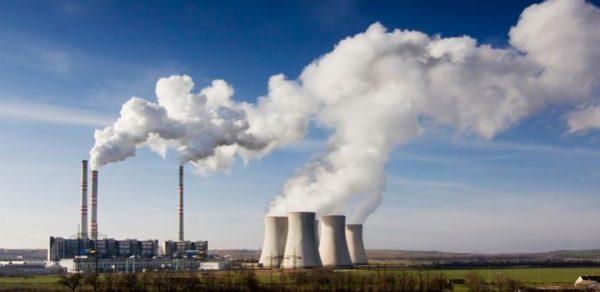 Reuters recently surveyed 32 utilities in the 26 states that sued over the Clean Power Plan. Most said they will not change their multi-billion dollar plans to shift away from coal.
“Utility planning typically takes place over much longer periods than presidential terms of office,” Berkshire Hathaway Inc-owned Pacificorp spokesman Tom Gauntt said.
Which brings us back to Alberta and its conservative parties, which may or may not be united into one party in the near future.
Premier Rachel Notley will never admit it publicly, but her government and the Trudeau Liberals in Ottawa have been purposefully following in Obama’s footsteps since they were elected.

Alberta NDP Premier Rachel Notley.
After launching the Climate Leadership Plan in late 2015, Notley spent a year in lockstep with the Obama Administration. With the election of Trump, and with the Republicans controlling Congress, the NDP appeared to be out of step with the new American energy and climate direction.
Now, momentum seems once more to be shifting in her direction.
The Climate Leadership Plan committed to phase out coal power generation: two-thirds would be replaced by renewables, one-third by natural gas. Alberta’s goal would be 30 percent renewable energy by 2030.
Not unlike the United States.
Oh, the proportions will be different. The American power generation system is much larger and more reliant upon coal. Wind has gained only a 5 per cent marketshare and solar 1 per cent, but the EIA forecasts that renewables will likely catch coal’s marketshare before 2030, largely because a new American power generation model has evolved that will exacerbate coal’s decline: natural gas + wind + solar + battery storage + smart grid.
This is essentially the new Alberta power generation model, probably with less emphasis on solar for the foreseeable future.
Which puts Alberta squarely “in step” with the United States.
Barnes is wrong when he writes “the U.S. [is] turning away from carbon reductions and towards energy competitiveness…”
Trump is reconsidering withdrawing from the Paris climate accord after being lobbied by Big Oil CEOs. He’s considering a carbon tax. American utilities continue to close coal power plants.
The President is discovering what many in the energy industry already know: carbon reduction and energy competitiveness go hand in hand. They are complementary, not competitive. The Canadian Energy Research Institute came to the same conclusion in its recent study of new GHG emission-reducing technology for the Alberta oil sands.
When Barnes writes that “Wildrose would scrap the Climate Action Plan,” he is playing with fire. The Trump Administration illustrates nothing if not that campaign rhetoric has little to do with the realities of governing.
Trump can’t revive coal because the long-term economic and technological trends in the industry favour cleaner forms of power generation.
There is a lesson here for Wildrose – and perhaps the PC party if Kenney is still leading it in 2019. Jean and Kenney need energy and climate policies more compatible with the long-term trends bedevilling Trump.
A platform focused on scrapping the Climate Action Plan would be going backward, not forward.